Source eco friendly pp lotion pump for body lotion, cosmetic, and daily sprayer
Find 30 eco friendly pp lotion pump options with PP material and recyclable features. Buyers can compare discharge rates, cap lock types, and export packaging from suppliers in Ningbo, Guangdong, and Xiamen.
Key considerations
Products List




Comprehensive Sourcing Guide
Strategic Sourcing Guide for Eco-Friendly PP Lotion Pumps
Understanding the Material and Environmental Profile
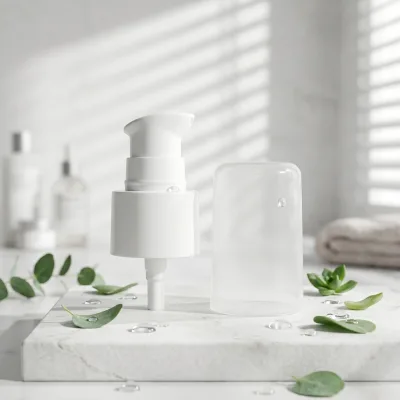
When sourcing eco-friendly PP (polypropylene) lotion pumps, the primary focus must be on the material composition and its end-of-life implications. The core material identified in current market offerings is polypropylene, a thermoplastic polymer known for its chemical resistance and durability. In the context of sustainability, the "eco-friendly" designation often hinges on the recyclability of the component. Market observations confirm that these pumps are frequently marketed with a "Recyclable" feature, suggesting they can be integrated into existing plastic recycling streams, provided the consumer separates them from the bottle.
However, buyers must exercise caution when interpreting the term "eco-friendly." While the base material is PP, the pump assembly often includes multiple components such as a dip tube, a spring, and a gasket. The supply data indicates that while the cap and main body are PP, the "Lock Type" varies, with some models featuring a "with Cap to Lock" mechanism. This mechanical complexity can sometimes hinder recycling efficiency if the components are not easily separable. Furthermore, the "Discharge Rate" specifications vary significantly across models, ranging from 1.19ml/T±0.01ml to 4cc. This variance is critical because the volume of plastic used per pump is directly linked to the discharge mechanism design. A higher discharge rate may require a more robust internal spring or a larger nozzle, potentially increasing the material weight and affecting the overall carbon footprint of the unit.
Buyers should verify that the "Recyclable" claim is supported by the specific design of the pump. The "Shape" of the pump, often described as "Solid Cone" or "Sector," influences the molding process and the amount of raw material required. A "Solid Cone" shape typically implies a more uniform wall thickness, which can be beneficial for consistent recycling, whereas complex "Sector" shapes might introduce variations in cooling rates during manufacturing, potentially leading to defects that render the batch non-recyclable. The "Closure Surface" is noted as "Smooth," which is a standard aesthetic and functional requirement but does not inherently dictate environmental performance.
Technical Specifications and Performance Metrics
Selecting the right lotion pump requires a deep dive into technical specifications that ensure compatibility with the intended cosmetic or personal care formulation. The most critical specification is the neck finish compatibility. The product data lists specific models such as "18/410," "20/410," and "24/410," alongside standard diameters like "φ24/410," "φ24/415," "φ28/400," and "φ28/410." These alphanumeric codes represent the thread diameter and pitch, which must match the bottle neck precisely to prevent leakage and ensure proper dispensing. A mismatch in these standards can lead to product failure, rendering the eco-friendly material useless due to spillage and waste.
The discharge rate is another pivotal technical parameter. The observed range spans from precise measurements like "1.19ml/T±0.01ml" to broader ranges like "2-4cc" and specific single values like "4cc." This variability dictates the pump's suitability for different product viscosities. A lotion with a high viscosity requires a pump with a larger discharge rate and a more powerful spring mechanism to ensure consistent flow. Conversely, a thin serum might require a lower discharge rate to prevent over-application. The "Size" of the pump, categorized as "Medium" in some listings, must align with the bottle's capacity and the consumer's expected usage pattern.
Additionally, the "Closure" type, described as "Smooth/Ribbed," affects the user experience and the seal integrity. A ribbed closure often provides better grip for the consumer, reducing the torque required to open the pump, which can be a subtle but important ergonomic factor. The "Cap" itself is typically made of PP or can be customized "as Cap," allowing for material variations that might impact the overall recyclability. If a buyer opts for a non-PP cap to achieve a specific color or texture, they must ensure that this deviation does not violate the "Recyclable" claim of the final product. The "Standard" weight of 23g is also noted for certain models, serving as a benchmark for material density and structural integrity.
Compliance, Certification, and Regulatory Verification
Navigating the regulatory landscape for cosmetic packaging is essential for maintaining brand integrity and market access. The supply data highlights several certifications and standards that buyers should prioritize. Prominent among these are "ISO," "SGS," "GMPC," and "ISO22716." ISO22716 is particularly significant as it represents the Good Manufacturing Practice (GMP) for cosmetics, ensuring that the manufacturing process adheres to strict hygiene and quality control standards. The presence of "SGS" certification suggests that third-party testing has been conducted to verify the product's safety and compliance with international regulations.
However, the data also presents conflicting or incomplete information regarding certifications. While "ISO" is listed as a high-confidence fact, "REACH" and "ISO 9001" appear in the low-confidence background section. Buyers should not assume that all listed products automatically possess REACH compliance or ISO 9001 certification without explicit verification from the supplier. The "Standard" section also lists "18/410 20/410 24/410" and "φ24/410, φ24/415, φ28/400, φ28/410," which are technical standards for thread compatibility rather than environmental certifications.
When evaluating suppliers, buyers must request specific documentation for each certification claim. For instance, if a supplier claims "GMPC" compliance, they should provide a valid certificate from a recognized body. The "Lead Time" of "7-15days" mentioned in the data suggests a relatively agile production process, but this should not come at the expense of rigorous quality checks. The "Sample: Free" attribute is a valuable tool for buyers to physically inspect the product and verify its compliance with their internal quality standards before committing to a larger order. It is crucial to understand that while a supplier may offer a "Free" sample, the actual production batch must undergo the same rigorous testing protocols to ensure consistency.
Cost Drivers and Economic Considerations
The economics of sourcing eco-friendly PP lotion pumps are influenced by several factors, including material costs, customization requirements, and order volume. The observed price range in the market is between $0 and $3.5 USD, which indicates a highly competitive and potentially commoditized market. However, this wide range likely reflects differences in quality, customization, and order quantity. The "MOQ" (Minimum Order Quantity) is substantial, ranging from 5,000 to 50,000 units. This high threshold suggests that the cost per unit decreases significantly with volume, making it essential for buyers to accurately forecast their demand to avoid excessive inventory costs.
Customization is a major cost driver. The "Customization: Available" attribute implies that buyers can tailor the pump's color, shape, and branding. The "Color: Red" example in the data illustrates that specific color requests may incur additional costs, especially if they require custom pigment mixing or separate production runs. The "ODM&OEM: Yes" status further confirms that suppliers are willing to adapt their designs, but this flexibility often comes with a premium. Buyers should weigh the benefits of a unique, branded pump against the increased unit cost and the potential impact on the "Recyclable" claim if non-standard materials are used.
Packaging and logistics also play a significant role in the total cost of ownership. The "prod_packing" details, such as "573737 400PCS/CTN" and "1000PCS/CTN, 573339cm," highlight the efficiency of the packaging design. A higher density of units per carton reduces shipping costs and minimizes the carbon footprint associated with transportation. The "Safe Export Pack" and "Export Standard Carton" descriptions suggest that suppliers prioritize protection during transit, which reduces the risk of damage and subsequent waste. However, buyers must calculate the total landed cost, including freight, insurance, and customs duties, to determine the true economic viability of the purchase.
Typical Applications and Market Segmentation
Eco-friendly PP lotion pumps are versatile and find applications across a broad spectrum of the personal care and cosmetic industry. The "Application" field explicitly lists "Body Lotion/Cosmetic etc," indicating their primary use in packaging for moisturizers, cleansers, and other skincare products. The "Function" is described as "Daily Sprayer Products," which aligns with the needs of consumers looking for convenient and hygienic dispensing solutions. The "Item Name: Lotion Pumps" reinforces their specific role in the market.
The "Shape" variations, such as "Solid Cone" and "Sector," cater to different aesthetic preferences and functional requirements. A "Solid Cone" shape might be preferred for a sleek, modern look, while a "Sector" shape could offer a more ergonomic grip. The "Discharge Rate" of "2-4cc" or "4cc" makes these pumps suitable for a wide range of viscosities, from thin lotions to thicker creams. This versatility allows brands to use the same pump model across different product lines, simplifying inventory management and reducing the environmental impact of switching between different packaging types.
Furthermore, the "Disposable" feature noted in some listings suggests that these pumps are designed for single-use applications or products with a short shelf life. This is particularly relevant for travel-sized products or promotional items where the pump is intended to be discarded after the product is finished. However, the "Recyclable" claim suggests that even disposable pumps should be designed with end-of-life considerations in mind. Buyers should consider the specific needs of their target market when selecting a pump. For example, luxury brands might prioritize a "Smooth" closure surface and a premium "PP Cap," while mass-market brands might focus on cost-effectiveness and high-volume production capabilities.
Supplier Evaluation and Quality Control Protocols
Evaluating suppliers for eco-friendly PP lotion pumps requires a multi-faceted approach that goes beyond price and lead time. The "Location" data indicates that suppliers are primarily based in "Ningbo," "Guangdong China," "Xiamen, Fujian," and "Guangzhou, China." These regions are known for their robust manufacturing ecosystems, but buyers must verify the specific capabilities of each supplier. The "Lead Time: 7-15days" is a strong indicator of production efficiency, but it should be cross-referenced with the supplier's ability to maintain quality during high-volume runs.
Quality control is paramount, especially when dealing with "Eco-Friendly" claims. Buyers should implement a rigorous inspection process that includes checking the "Discharge Rate" consistency, the "Lock Type" functionality, and the "Closure Surface" finish. The "Standard" of "23g" for certain models provides a baseline for weight verification, ensuring that the material usage is consistent with the design specifications. The "Safe Export Pack" and "Export Standard Carton" are essential for protecting the product during transit, but buyers should also verify the internal packaging to prevent damage to the delicate pump mechanisms.
The "Sample: Free" attribute is a critical tool for quality assessment. Buyers should request samples of different models, such as "SCP6001," "WK-21-16," and "zx-62," to evaluate their performance in real-world conditions. Testing the "Discharge Rate" of these samples against the claimed specifications will help identify any discrepancies. Additionally, buyers should verify the "Certification" documents, ensuring that the "ISO," "SGS," and "GMPC" claims are valid and up-to-date. The "ODM&OEM: Yes" status suggests that suppliers are flexible, but buyers must ensure that any customizations do not compromise the structural integrity or recyclability of the pump.
Long-Term Procurement and Sustainability Strategy
Sourcing eco-friendly PP lotion pumps is not just a transactional decision but a strategic move that aligns with long-term sustainability goals. The "Recyclable" feature is a key selling point, but buyers must ensure that the entire supply chain supports this claim. This includes verifying that the raw materials are sourced responsibly and that the manufacturing process minimizes waste and energy consumption. The "Customization: Available" attribute offers opportunities to innovate, but buyers should avoid over-engineering the product, which can lead to unnecessary material use and complexity in recycling.
The "MOQ" range of 5,000 to 50,000 units suggests that buyers should plan their procurement cycles carefully to optimize inventory levels and reduce waste. A strategic approach might involve negotiating longer-term contracts with suppliers to secure better pricing and ensure consistent supply. The "Lead Time: 7-15days" allows for agile responses to market changes, but buyers should also consider the potential for supply chain disruptions and build buffer stock accordingly.
Finally, buyers should stay informed about evolving regulations and consumer expectations regarding sustainability. The "Standard" of "ISO22716" and "GMPC" are currently relevant, but future regulations may impose stricter requirements on the recyclability and biodegradability of packaging. By maintaining a proactive relationship with suppliers and staying engaged with industry trends, buyers can ensure that their procurement strategy remains aligned with the evolving landscape of eco-friendly packaging. The "Product Origin" in "China" is a significant factor, as the country's manufacturing capabilities are vast, but buyers must ensure that the specific supplier adheres to the highest environmental and quality standards.
FAQs
What certifications do eco friendly pp lotion pumps have?
Products often carry ISO, SGS, GMPC, and ISO22716 certifications. Buyers must verify specific documentation for each claim as REACH and ISO 9001 are not guaranteed for all listed items.
Which specifications are available for the pump models?
Common models include 18/410, 20/410, 24/410, and specific codes like M20-AS24/410S. The discharge rates vary from 1.19ml/T to 4cc depending on the specific design and application.
Can buyers request customization for these pumps?
Yes, customization is available for color, shape, and branding. Buyers should note that specific requests like red caps may affect costs and the recyclability of the final assembly.
How long is the lead time for production?
The standard lead time ranges from 7 to 15 days. This duration applies to standard orders but may vary if complex customization or large volume orders are required.
What is the minimum order quantity for these pumps?
The minimum order quantity ranges from 5000 to 50000 units. Higher volumes typically reduce the unit price, making accurate demand forecasting essential for cost efficiency.
Where are the manufacturers located?
Manufacturers are primarily located in Ningbo, Guangdong, Xiamen, and Guangzhou in China. Buyers should verify the specific origin of the batch to ensure logistics alignment.
Are these pumps recyclable and eco-friendly?
The pumps are made of PP and are marketed as recyclable. However, the presence of multiple components like springs and gaskets may impact the ease of recycling if not separated properly.